


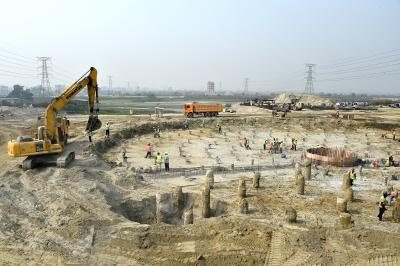
Bangladesh’s involvement in the Chinese-funded Belt and Road Initiative (BRI) has shown significant but uneven advancements in transport and energy infrastructure over the last decade, as per a report. The country was anticipated to receive approximately $40 billion in Chinese investments under the BRI, with a major portion earmarked for independent and joint venture projects. However, most of this funding is yet to materialize, leading to delays and increased project costs.
Despite substantial Chinese commitments to Bangladesh in 2016, only a small portion of the promised investments has been realized. The sluggish pace of project execution, coupled with escalating costs, has impeded Bangladesh’s infrastructure development plans. Issues like bureaucratic hurdles, corruption risks, and debt sustainability concerns have also impacted the country’s decision-making processes, the report highlighted.
Critics view the BRI projects in Bangladesh as part of China’s broader strategy to enhance its geopolitical influence in the Bay of Bengal. They suggest that China aims to utilize Bangladesh’s infrastructure, particularly its seaports, to further its strategic interests. While Bangladesh holds geostrategic importance for China, the report emphasized that this significance should not be overstated.
In the event of a Sino-Indian conflict, Bangladesh’s territory could be strategically valuable for China. However, the report noted that Bangladesh has maintained a neutral stance during regional tensions, indicating its reluctance to be embroiled in conflicts that could jeopardize its security. Even if China intended to utilize BRI-related infrastructure in Bangladesh for military purposes, the report deemed it practically unfeasible for Beijing.
