


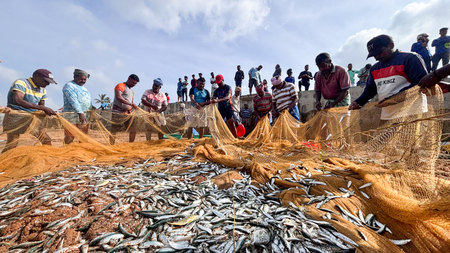
Countries around the Bay of Bengal are gearing up for a significant transformation in fisheries governance, with a renewed emphasis on enhancing policy frameworks for the small-scale fisheries sector that supports millions of coastal households.
At a recent meeting of the Sub-Committee on Fisheries Management (COFI-FM) organized by the Food and Agriculture Organisation in Reykjavik, the Bay of Bengal Programme Inter-Governmental Organisation (BOBP-IGO) presented a roadmap for FAO regional collaboration to revamp governance systems in India, Bangladesh, the Maldives, and Sri Lanka.
A key initiative proposed is the establishment of National Plans of Action dedicated to small-scale fisheries, with a focus on inclusive governance, social protection, and practical management tools that could have a direct impact on future policy and regulatory measures in India.
BOBP-IGO highlighted a pressing structural issue: a significant portion of the region’s fishing fleet is approaching the end of its operational lifespan. Dr. P. Krishnan, the Director, urged for timely plans to phase out aging vessels, promote circular economy practices, and introduce safer and more durable boat-building materials to ensure sustainability and protect livelihoods tied to coastal resources.
The transition is not just about infrastructure but also emphasizes social aspects, safety at sea, insurance coverage, decent working conditions, and diversified livelihood support. There is a specific focus on increasing women’s involvement across fisheries value chains, indicating a broader move towards gender-inclusive progress.
The proposed roadmap stresses the need to translate scientific stock assessments into practical guidelines for swift policy implementation. It also advocates for enhanced regional cooperation among countries sharing fish stocks to combat overfishing and ensure long-term fish availability.
Moreover, countries are urged to step up joint efforts against illegal fishing by leveraging digital tools and AI-based monitoring systems to modernize compliance and reporting. If effectively implemented, these governance reforms could significantly impact the economic and ecological future of the Bay of Bengal’s fisheries sector, leading to improved incomes, elevated safety standards, and strengthened sustainability in one of the world’s most densely populated marine regions.
