


Patna, Aug 4 (IANS) The Bihar government is preparing a comprehensive plan to secure global recognition for the state’s millennia-old historical and cultural heritage and develop major archaeological sites as new tourism destinations.
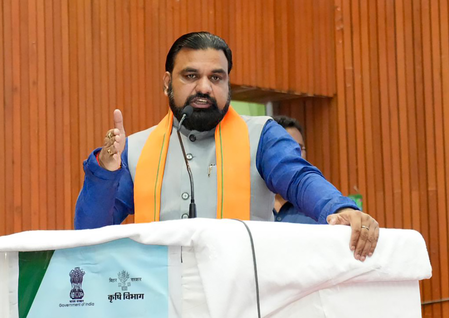
Chief Minister Samrat Chaudhary has directed officials to prepare a detailed action plan for the conservation, scientific survey, excavation and integrated development of important heritage sites, including Bodh Gaya, Sultanganj, Mandar and the world-famous Kesaria Stupa.
The government aims to restore the historical significance of these sites and develop them as major attractions for both domestic and international tourists.
A delegation of senior archaeologists and heritage experts met Chaudhary and presented a detailed report on the survey of the Maa Mundeshwari Temple complex in Kaimur and its surrounding areas.
According to the experts, thousands of ancient ruins scattered across the temple complex have significant archaeological value and can be scientifically documented, conserved and restored. The delegation suggested developing the wider region as an important centre of Indian archaeological heritage.
Chaudhary directed officials to prepare a phased action plan for the scientific conservation and restoration of the ruins in accordance with expert recommendations.
He also stressed the integrated development of the area’s tourism infrastructure so visitors can experience its historical, cultural and religious significance.
The delegation included Padma Shri archaeologist K.K. Mohammed, Professor Rajat Sanyal of the Kolkata Institute, Professor Anil Kumar, CEO of the Bihar Heritage Development Society, Hariom Sharma, Superintending Archaeologist of the Archaeological Survey of India, Development Commissioner Mihir Kumar Singh and Secretary of the Art, Culture and Youth Affairs/Building Construction departments, Pranav Kumar.
The meeting also focused on the integrated development of natural and prehistoric sites in Kaimur, including Tilhar Kund and Karkatgarh. These locations are situated around four kilometres from the Banaras-Kolkata Expressway, which is expected to improve accessibility and make the sites more attractive to tourists.
Experts said Kaimur’s combination of natural landscapes, prehistoric remains and archaeological heritage provides an opportunity to create a new heritage and eco-tourism circuit in Bihar.
Following scientific conservation and systematic development, efforts will also be made to seek inclusion of eligible sites in the UNESCO World Heritage tentative list.
Special emphasis was also placed on the archaeological potential of Bodh Gaya. Chaudhary directed officials to conduct surveys of the Mahabodhi Temple complex and surrounding areas using advanced technologies such as LiDAR (Light Detection and Ranging) and GPR (Ground Penetrating Radar). These technologies can help identify potential underground structures and archaeological remains without immediately resorting to excavation.
The information obtained through such surveys could subsequently help make excavation work more targeted and scientifically precise.
The government also discussed the conservation and integrated development of historically and archaeologically important sites in Sultanganj and Mandar.
Chaudhary stressed that the historical significance of these areas should be systematically preserved and presented to visitors, giving fresh momentum to religious and cultural tourism.
–IANS
ajk/dan
