


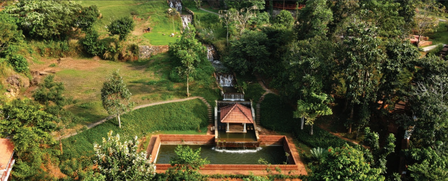
Thrissur (Kerala), Aug 7 (IANS) Nestled in the lush green expanse of Nedumpura in Kerala’s Thrissur district lies a remarkable garden where centuries-old knowledge meets modern conservation.
The Hortus Malabaricus Botanical Garden and Research Institute is not just a haven for biodiversity; it is a living tribute to a historic botanical treatise that once changed the way the world understood plants.
Opened in January this year after a decade-long work for its development, it’s spread over 27 acres, and the garden houses over 1,200 plant species, including 742 plants documented in the 17th-century Latin masterpiece Hortus Malabaricus (Garden of Malabar).
This ambitious conservation project serves as a sanctuary for native medicinal flora and endangered species endemic to the Western Ghats.
The original Hortus Malabaricus was compiled between 1678 and 1693 under the direction of Dutch Governor Hendrik van Rheede, with invaluable input from local Kerala physicians like Itty Achuthan, an Ezhava practitioner, and the Kollat Vaidyans of the Nair community.
With meticulous detail, the twelve-volume work catalogued the medicinal properties and uses of the region’s flora.
The treatise had a profound impact on global botanical science.
None other than Carl Linnaeus, the father of modern taxonomy, drew upon its findings for his foundational work Species Plantarum.
However, the text remained largely inaccessible to the general public for centuries — until Dr K.S. Manilal, a distinguished Indian botanist, spent 35 years translating, annotating, and contextualizing the Latin original into both English and Malayalam.
The garden is more than a homage to historical knowledge. It’s a scientific and educational initiative.
With over 700 rare species from the Western Ghats growing alongside those catalogued in the original treatise, it forms a vibrant learning center for botanists, students, traditional healers, and nature lovers.
A major attraction is Manilal Street, named in honor of Dr Manilal’s lifelong dedication to the Hortus Malabaricus project.
Visitors can also attend workshops and seminars that explore the ethnobotanical, cultural, and scientific dimensions of Kerala’s floral traditions — linking age-old healing systems with modern biology and genomics.
The visionary force behind this initiative is Sam Santhosh, an entrepreneur and genomics pioneer hailed as the “Genome Man of India.”
After a two-decade-long career in IT where he founded and took Calsoft public, Sam turned his focus to genomics.
The creation of the Hortus Malabaricus Botanical Garden is a deeply personal project for him — rooted in heritage, science, and a desire to inspire future generations.
Visitors to the Hortus Malabaricus Garden can explore its curated sections, take guided tours, or book eco-friendly cottages at the adjacent resort for longer stays.
The garden is fast becoming a cultural and scientific landmark — a place where history breathes through leaves, and where every plant tells a story that began hundreds of years ago on the Malabar Coast.
–IANS
sg/skp
