


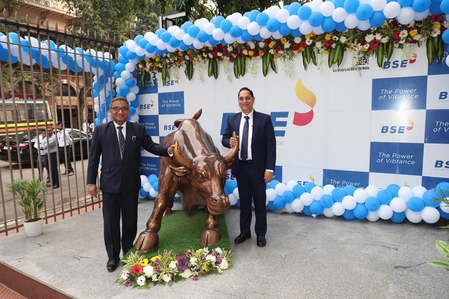
BSE Limited (BSE), Asia’s oldest stock exchange, celebrated a significant milestone as it marked 40 years of Sensex, India’s foremost stock market index. Launched in 1986, Sensex is a key indicator of India’s equity market, comprising 30 leading companies from various sectors like finance, technology, energy, and healthcare. Representing around 40% of the nation’s market capitalization, Sensex plays a crucial role in reflecting India’s economic strength and stock market performance.
The Managing Director and CEO of BSE, Sundararaman Ramamurthy, emphasized that the celebration of Sensex’s 40-year journey is not just about an index but also a tribute to India’s capital market evolution. He highlighted how Sensex has documented India’s growth story by evolving into a technology-driven and investor-friendly ecosystem, aligning with India’s changing economic landscape.
Tuhin Kanta Pandey, Chairman of SEBI, praised Sensex for its resilience over the past four decades as a reliable market indicator that mirrors India’s economic progress and the maturation of its capital markets. Initially calculated using a market-cap-weighted methodology with 30 component stocks, Sensex transitioned to a free-float market-cap methodology since September 1, 2003, aligning with global index construction standards.
The Sensex is a widely monitored benchmark in India, with over 20 Exchange Traded Funds (ETFs) and index funds managing assets totaling Rs 2.5 lakh crore. It boasts active index options contracts globally and has been the fastest-growing index derivatives contract for the past two years. Since its inception, Sensex has delivered a compounded annual growth rate (CAGR) of 13.4%, closely tracking India’s nominal GDP growth of nearly 13% during the same period.
