


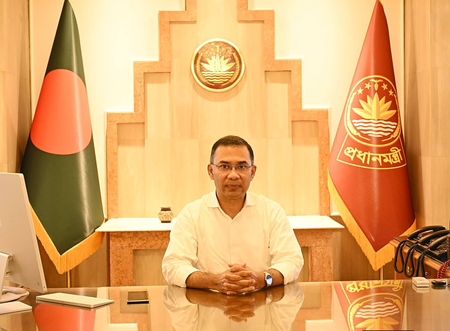
As the Bangladesh Nationalist Party (BNP) led by Tarique Rahman took power after winning the 13th Parliamentary elections, reports reveal that 70% of the newly formed cabinet comprises business leaders. Out of the 50 ministers and state ministers, 35 have listed business as their profession based on affidavits submitted to the Election Commission.
An analysis of the affidavits showed that 19 cabinet ministers and 16 state ministers identified themselves as businesspersons. Lawyers also hold a significant presence in the cabinet, alongside members with diverse professional backgrounds.
Despite their political experience, only two cabinet members, Prime Minister Tarique Rahman and Education Minister ANM Ehsanul Haque Milon, mentioned “politics” as their profession. Most others cited business or different occupations, according to the Dhaka Tribune.
On February 17, 25 ministers, including two from the technocrat quota, were sworn in at the National Parliament in Dhaka. Transparency International Bangladesh’s Executive Director, Iftekharuzzaman, expressed concerns about the high number of businesspersons in the cabinet, warning that it could lead to conflicts of interest.
Iftekharuzzaman emphasized the importance of ministers avoiding decisions that could benefit their businesses directly or indirectly to maintain fair market practices. The prevalence of businesspersons extends to the parliament, with 59% of the 300 elected MPs declaring business as their profession, including those linked to the garment industry.
The BNP, winning 209 seats, saw 145 winning candidates with business backgrounds. Jamaat-e-Islami, securing 68 seats, has 20 MPs from business-related fields. A recent study by Transparency International Bangladesh revealed that 79.46% of the newly elected MPs are millionaires, with 13 billionaires among them.
The study also highlighted that 90.87% of BNP lawmakers are millionaires, while 55.07% of Jamaat members fall into the same category. The data underscores the significant presence of wealthy individuals in Bangladesh’s political landscape.
