


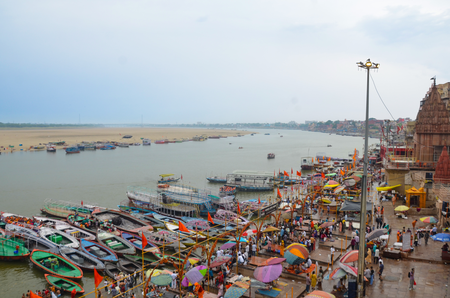
The Cabinet Committee on Economic Affairs, led by Prime Minister Narendra Modi, has given the green light to a project aimed at easing traffic congestion in Varanasi, Uttar Pradesh. The initiative involves constructing a link corridor between National Highway-19 and the Varanasi Ring Road along the River Ganga. The total cost of the project is estimated at Rs 14,447.64 crore, covering civil construction and land acquisition expenses.
The project, spanning 46.039 km, will feature a six-lane elevated main carriageway, an iconic cable-stayed bridge, foot-over-bridge-cum-major bridge, loops, ramps, and service roads. It will be executed under the Hybrid Annuity Model (HAM) to enhance connectivity between NH-19 and the Varanasi Ring Road, thereby reducing congestion and improving urban mobility. The corridor is designed for an operational speed of 80–100 km/h, promising to cut travel time by nearly 67%.
Aligned with the PM Gati Shakti National Master Plan, the corridor will not only enhance connectivity to key landmarks like the Kashi Vishwanath Temple and Banaras Hindu University but also bolster logistics efficiency and support regional economic growth. By providing a high-speed connection between NH-19, Varanasi Ring Road, and other urban destinations, the project aims to ease traffic congestion and enhance road safety in Varanasi and Chandauli.
The project’s engineering highlights include a 910 m cable-stayed bridge across the Ganga, an extradosed FOB-cum-major bridge, dedicated emergency parking bays, noise barriers, and architectural elements inspired by Varanasi’s cultural heritage. These features are expected to improve transportation efficiency, enhance the city’s urban landscape, and establish Varanasi as a prominent religious and cultural destination.
