


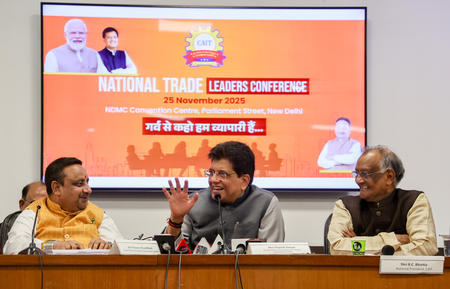
India’s digital market growth poses a threat to traditional retail, warns the Confederation of All India Traders (CAIT). CAIT emphasizes the need for a National E-Commerce Policy to protect small traders and millions of jobs. The latest report by Deloitte and Google highlights the rapid expansion of India’s digital commerce sector, stressing the necessity for policy safeguards.
India’s e-commerce market has surged to nearly $90 billion between 2019 and 2025, with a projected $250 billion by 2030. By 2030, the report predicts 22 crore new Gen Z shoppers entering online commerce, with Gen Z consumers contributing 45% of total online spending. Additionally, 15 crore new shoppers are expected to go online, and per capita e-commerce spending is set to double.
Tier-2 cities and smaller towns already represent over 60% of online shoppers, nearly half of total spending, and close to three-fifths of total orders. CAIT underscores the immense scale and potential in India’s digital market, urging the government to swiftly implement a comprehensive National E-Commerce Policy.
CAIT calls for strict enforcement of FDI rules, a ban on predatory pricing, regulation of dark stores, transparency in algorithms, and protection against counterfeit goods. The organization advocates for equal opportunities for MSMEs and small retailers, data protection, and a grievance redressal system. CAIT emphasizes that any disruption to India’s retail ecosystem could have significant economic and social repercussions.
Alleging violations of India’s FDI policy, CAIT accuses major e-commerce players of adopting inventory-controlled models. The organization condemns practices like predatory pricing, deep discounting, and supply of sub-standard goods. CAIT warns that these tactics are not only anti-competitive but also threaten the livelihoods of honest traders who have long contributed to India’s domestic market.
