


The Centre has emphasized the need for a thorough scientific and socio-economic evaluation before allowing year-round integrated paddy–fish farming in Kerala’s ecologically sensitive Pokkali fields. Union Minister of State for Agriculture and Farmers’ Welfare Ramnath Thakur highlighted the importance of studying whether continuous fish farming could boost farm incomes sustainably without harming the delicate Pokkali ecosystem or related livelihoods.
During a visit to the Pokkali fields, the minister responded to farmers’ requests to expand fish farming beyond the current seasonal pattern. Currently, Pokkali farming involves a traditional cycle of paddy cultivation from June to October and fish farming from November to April, based on salinity levels.
Farmers have suggested that permitting fish farming throughout the year could enhance profits, particularly amidst escalating input costs and climate-related challenges affecting rice production. However, Thakur stressed the necessity of a comprehensive assessment of existing regulations, environmental impacts, and long-term socio-economic consequences before any policy adjustments.
Thakur emphasized the importance of science-based evaluations to strike a balance between productivity, farmers’ incomes, the interests of traditional fishing communities, and ecosystem preservation. He cautioned that extending fish farming without sufficient evidence could lead to unintended outcomes.
The Ernakulam Krishi Vigyan Kendra (KVK) under the ICAR–Central Marine Fisheries Research Institute (CMFRI) facilitated the minister’s visit. CMFRI Director Dr. Grinson George proposed a pilot project covering 50 acres of Pokkali fields to gather data for future policy decisions, subject to state government approval.
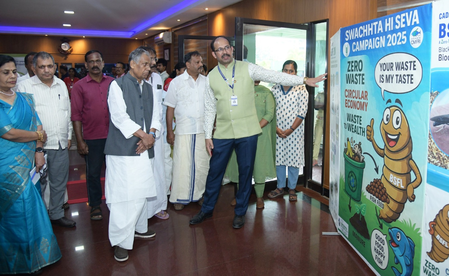
During the visit, Thakur encouraged scientists to ensure that research findings benefit farmers and rural communities. He also unveiled CMFRI’s new product, Cadalmin, BSF Green Organic Compost, developed using zero-waste bioconversion technology involving black soldier fly larvae, along with other fisheries-related technological publications. Thakur reviewed the operations of CMFRI and the Coconut Development Board, emphasizing the government’s commitment to innovation-driven, sustainable growth in the agri-fisheries sector.
