


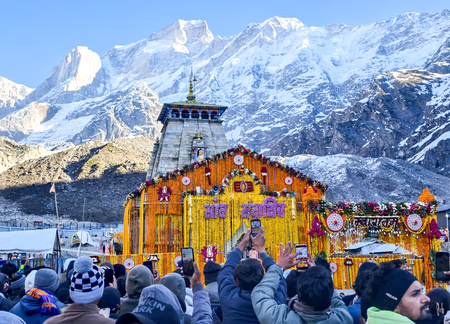
Char Dham Yatra is a revered pilgrimage in Hindu culture, encompassing four sacred sites in the Garhwal Himalayas of Uttarakhand: Yamunotri, Gangotri, Kedarnath, and Badrinath. This spiritual journey, with deep historical and cultural roots, has been inspiring devotees for centuries, enriching India’s spiritual legacy. The pilgrimage circuit was formalized by Adi Shankaracharya, an influential 8th-century philosopher, to foster unity within Hinduism amidst diverse beliefs across the subcontinent.
Adi Shankaracharya’s initiative of linking these distant shrines into a single spiritual route aimed at creating a shared religious experience that transcended regional boundaries. Starting at Yamunotri, dedicated to Goddess Yamuna, the pilgrimage progresses to Gangotri, the source of the River Ganga, reflecting themes of penance and divine grace. Kedarnath, dedicated to Lord Shiva, and Badrinath, devoted to Lord Vishnu, are revered pilgrimage destinations with rich historical and spiritual significance.
The Char Dham Yatra, beyond its physical presence, embodies the philosophical teachings of Adi Shankaracharya, emphasizing unity and devotion. Historically, this pilgrimage has not only shaped India’s cultural and social landscape but also fostered cultural exchange and economic activity among diverse communities. Efforts to enhance accessibility to these remote shrines have been made in recent years, preserving the yatra’s spiritual essence while improving infrastructure for pilgrims.
