


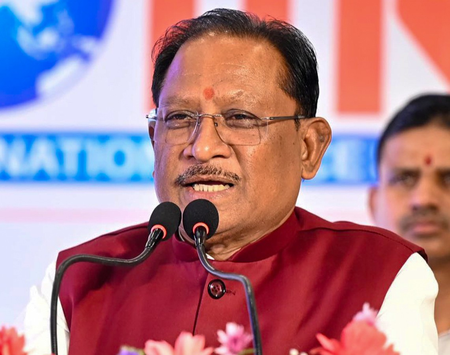
Chhattisgarh Chief Minister Vishnu Deo Sai praised the advancements in Bastar, highlighting the state’s steadfast dedication to progress. He affirmed the commitment to achieving a Naxal-free Bastar and ensuring a secure Chhattisgarh. The Chief Minister attributed the positive developments to coordinated security measures, the establishment of strong security camps, improved road connectivity, and ongoing efforts that have weakened Maoist influence in the region.
In a significant step towards eliminating Naxalism from Bastar, four active Maoist members surrendered to security forces in the Kistaram area of Sukma district. Each of these individuals carried a bounty of Rs 8 lakh, indicating their significance within the outlawed CPI (Maoist) network. This surrender is part of a broader trend of Maoist defections in Bastar, with numerous cadres renouncing violence under the state’s rehabilitation programs.
Authorities interpret these surrenders as signs of diminishing Naxal strength, aligning with the goal of a Maoist-free Chhattisgarh by March 31, 2026. To support the security gains, the Dantewada district administration has initiated a proactive rehabilitation scheme to assist the reintegration of surrendered Naxalites. Additionally, a training program for 35 surrendered youths in masonry work has been launched in collaboration with the State Bank of India’s Rural Self-Employment Training Institute, aiming to equip them with employable skills.
Efforts like these, combining anti-Naxal operations with compassionate rehabilitation, underscore Chhattisgarh’s comprehensive approach to addressing insurgency. By empowering former insurgents with vocational training, the program aims to ensure sustainable livelihoods and prevent a return to extremism. Officials believe that as development extends to remote areas and trust grows within local communities, the cycle of violence will further diminish, fostering lasting peace in one of India’s most conflict-affected regions.
