


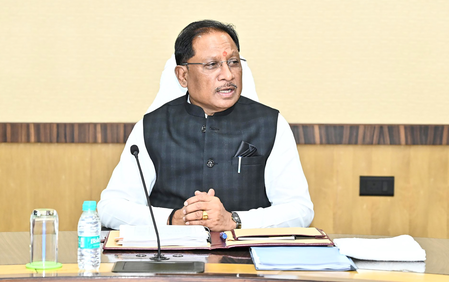
The Chhattisgarh government, under Chief Minister Vishnu Deo Sai, swiftly retracted a directive within 24 hours of its issuance, sparking political discussions in the state. Initially, the order prohibited government officers from holding political posts or engaging in political activities, threatening disciplinary action for violations under Civil Conduct Rules. However, facing opposition, including objections from the Congress party, the government decided to withdraw the directive.
The Congress party highlighted that Civil Services Conduct Rules already prohibit government employees nationwide from participating in political activities. The issuance of the new circular raised concerns, particularly regarding involvement in events organized by the Rashtriya Swayamsevak Sangh and potential rule violations. This pressure led to the government’s decision to rescind the order.
In accordance with the Chhattisgarh Civil Services (Conduct) Rules, government employees must uphold integrity and impartiality in their duties, refraining from active political affiliations or activities that may compromise neutrality. Although the withdrawn circular reiterated these rules, its sudden release was viewed as politically driven, emphasizing the delicate balance between governance and party politics in the state.
The Sai government’s withdrawal of the order aimed to ease tensions and prevent further controversy. However, the incident has initiated debates on the involvement of government employees in politics and the boundaries of administrative neutrality. The episode underscores how even established regulations can become contentious when reintroduced in a politically charged atmosphere.
While affirming the binding nature of the rules, the government’s retraction of the circular reflects an attempt to harmonize administrative discipline with political circumstances. The ongoing debate centers on clarifying whether participation in specific organizations constitutes political activity, a question left unresolved despite the government’s swift reversal.
