


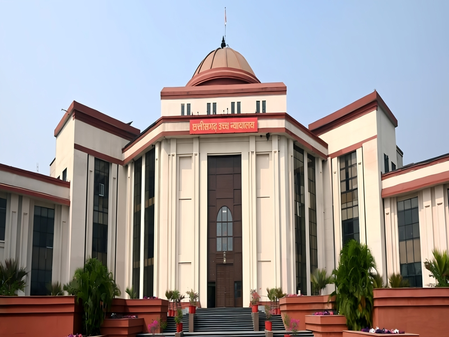
The Chhattisgarh High Court has rejected a petition challenging the state government’s directive to include Saraswati Vandana, Gayatri Mantra, Guru Mantra, Shanti Mantra, and other invocations in government school assemblies starting from the 2026-27 academic year. The court stated that the order did not force students to go against their religious beliefs or faith.
According to the court, the government’s directive did not impose any mandatory actions conflicting with students’ religious beliefs or conscience. The court emphasized that the petitioners did not provide evidence of any violation of fundamental rights or direct harm.
Former Chhattisgarh Waqf Board chairman Abdul Salam Rizvi, former Minority Department chairman Mahendra Chhabda, and social activist Shafique Ahmed filed the petition seeking to declare the compulsory recitation of religious prayers in state-funded schools as unconstitutional. They argued that the directive infringed upon various articles of the Constitution by compelling minority students to participate in religious practices.
The state government defended the directive, stating that it aimed to instill discipline, moral values, environmental awareness, and national heritage in students in line with the National Education Policy, 2020. The court agreed with the government’s stance, highlighting that the policy did not amount to religious instruction or conversion.
The Chhattisgarh High Court dismissed the petition as premature, noting that it was based on speculative concerns rather than actual grievances. The court ruled that the requested reliefs could not be granted at this stage but allowed the petitioners the option to approach the court again with relevant material if needed in the future.
