


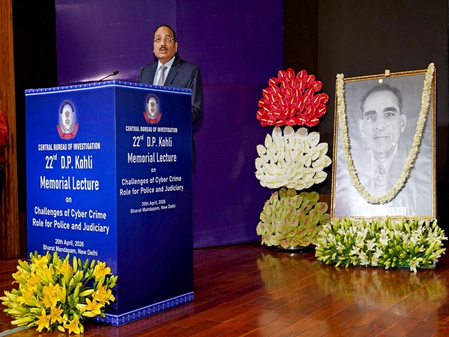
Chief Justice of India (CJI) Surya Kant highlighted the pressing need for immediate adoption of real-time enforcement strategies to effectively tackle the growing threat of cybercrime in the country. Speaking at the 22nd D.P. Kohli Memorial Lecture, the CJI emphasized that conventional enforcement methods are inadequate against cyber offenses that are fast-paced, transnational, and often anonymous. The lecture, hosted by the Central Bureau of Investigation (CBI), centered on the topic “Challenges of Cyber Crime: Role for Police and Judiciary,” bringing together stakeholders from law enforcement and the legal community.
Pointing out deficiencies in the existing system, the CJI noted a significant gap between the swift execution of cybercrimes and the delayed response from authorities. He called for enhanced real-time collaboration among various stakeholders, including banks, telecom providers, digital platforms, and investigative agencies, to ensure prompt identification, response, and mitigation of cyber threats.
Advocating for a shift in approach, CJI Kant stressed the importance of embracing technology-driven solutions like automated detection systems, early warning mechanisms, and integrated command structures. He underscored the necessity of developing expertise in digital forensics, cyber intelligence, and specialized training within investigative and enforcement agencies to effectively address complex cyber threats.
In his address, the CJI emphasized the significance of a coordinated, proactive, and cooperative strategy in combating cybercrime, highlighting the need for judicial adaptability and robust technological safeguards to complement enforcement actions. He identified capacity building, inter-agency cooperation, and technology-focused governance as essential elements in enhancing India’s institutional response to cybercrime.
