


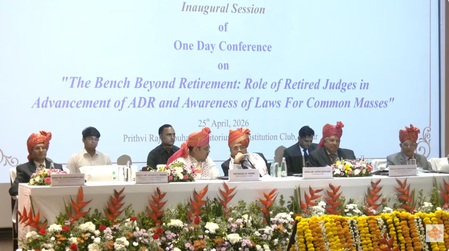
Chief Justice of India, Surya Kant, highlighted the significance of retired judges in bolstering the judiciary, likening them to Rajasthan’s essential “bawris” (stepwells) crucial during droughts. Speaking at a seminar in Jaipur, he compared former judges to these stepwells that provide support during institutional stress, drawing from his roots in Churu where such structures are vital. CJI Kant stressed that retired judges, with their wisdom and experience, play a crucial role in various legal processes during times of crisis.
Former judges, according to CJI Surya Kant, are akin to the stepwells that store rainwater for arid times, emphasizing that their knowledge and insights are invaluable in courts, Lok Adalats, and mediation. He noted that a judge’s service is enduring, stating that their experience cannot be replaced by committees or training programs. Surya Kant emphasized that retired judges bring not only legal expertise but also a deep understanding of societal issues, from rural distress to personal disputes, making their trust and experience a national asset.
The Chief Justice proposed structured roles for retired judges, suggesting they could contribute significantly as mediators, legal educators, pre-litigation counselors, and institution builders. He highlighted the importance of utilizing the trust earned by judges over the years, warning against underutilizing this valuable resource. CJI Kant called for a formal framework to engage retired judges effectively, emphasizing the need for dignity and accountability in their roles instead of ad-hoc arrangements.
Referring to poet Dushyant Kumar, CJI Surya Kant emphasized the enduring faith of citizens in the judiciary and the responsibility to strengthen that trust. Quoting lines about resilience, he stressed the importance of a robust system built on experience and wisdom to overcome challenges. The Chief Justice urged for the preservation and meaningful involvement of retired judges to ensure enduring justice and accessibility for all.
