


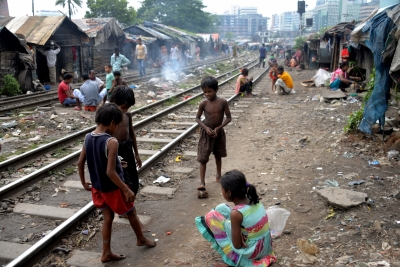
Child labor in Bangladesh has risen over the past six years, with an additional 1.2 million children joining the workforce since 2019, as per the latest Multiple Indicator Cluster Survey (MICS) 2025. Currently, 9.2% of children aged 5 to 17 are engaged in child labor, up from 6.8% in 2019. This increase comes despite Bangladesh’s efforts to eradicate child labor and coincides with the World Day Against Child Labor observed on June 12.
The report highlights that economic difficulties are compelling children to leave education and enter the workforce. Out-of-school children in Bangladesh are four times more likely to be working than those attending school, indicating a link between poverty, lack of education, and child labor. Boys are disproportionately affected, with around 11% involved in child labor compared to 7% of girls.
In Bangladesh, 8% of children aged 5 to 11 are working, while 14% of those aged 12 to 14 are engaged in labor. The regions with the highest child labor rates are Rajshahi at 12.4%, Rangpur at 11.8%, Mymensingh at 10.1%, and Khulna at 9.8%. Conversely, child labor rates are lower in Barisal, Sylhet, Chittagong, and Dhaka.
Last month, UNICEF expressed deep concern over the increasing incidents of violence against children in Bangladesh, including cases of rape and murder in supposed safe spaces. UNICEF Representative in Bangladesh, Rana Flowers, emphasized the need to halt brutality against children and enhance measures to prevent child and gender-based violence nationwide.
