


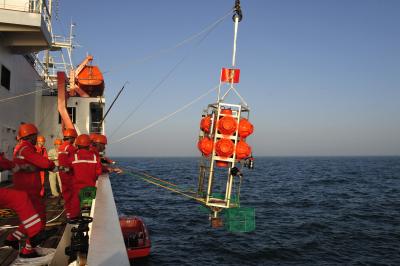
China is increasing its presence in disputed waters not only through artificial islands and military bases but also by utilizing civilian, quasi-civilian, and dual-use tools, a report revealed. While discussions have typically centered on China’s military assets like warships and airstrips, recent developments highlight a more diverse strategy. The report emphasized that China’s approach now involves a broader range of activities such as Coast Guard patrols, scientific expeditions, and floating platforms to maintain a continuous presence in contested areas.
The report pointed out that China’s focus is shifting towards establishing a wider ecosystem of infrastructure and services in contested waters. Rather than solely constructing fixed military facilities, China is now emphasizing maintaining a continuous presence through various means. This strategy not only reinforces Chinese claims but also reduces the likelihood of triggering strong international reactions that were seen during the island-building campaign.
China’s use of instruments like floating platforms at locations such as Scarborough Shoal demonstrates its ability to establish semi-permanent presence without extensive construction projects. These structures, operating in a grey area between civilian and governmental activities, are easier to politically justify and deploy compared to permanent military installations. The report highlighted that many of these tools operate in a similar grey zone, blurring the lines between civilian and governmental functions.
The report underscored that China’s objective goes beyond military aspects to establish itself as the primary authority in contested maritime regions. This institutional shift poses challenges for regional actors as traditional deterrence frameworks may not effectively address activities like scientific surveys or fisheries regulations. While naval power remains relevant, it may not be the most suitable response to China’s evolving tactics in contested waters.
