


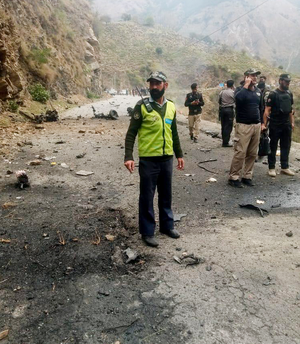
The recent increase in militant assaults in Pakistan has raised concerns for China, a major investor in the country since 2015. Notably, the Baloch Liberation Army has been targeting Chinese interests, claiming that China is exploiting Balochistan’s resources. Balochistan, a region rich in resources and a key part of China’s Belt and Road Initiative, has witnessed a rise in violence, with Chinese projects frequently becoming targets.
The Baloch Liberation Army has carried out more than 100 attacks in Balochistan in the first half of this year, targeting foreign investment projects and security forces. Analysts attribute the unrest to long-standing local grievances, with Baloch militant groups advocating for an independent Balochistan due to alleged exploitation by Pakistan. Despite its strategic location, Balochistan remains Pakistan’s most underdeveloped province.
The security threats, political instability, and economic challenges in Balochistan have led to delays in implementing projects under the China-Pakistan Economic Corridor (CPEC). This has resulted in a loss of momentum for CPEC, with concerns over security prompting China to reassess investments and demand stronger security measures. Discussions between Chinese and Pakistani officials continue to focus on security issues amid the escalating militancy in Pakistan.
Political scientist Ayesha Siddiqa warns that the security threat in Pakistan is likely to persist and even worsen in the future. She attributes this to global geopolitical conditions and the increasing militant violence in Pakistan. Siddiqa emphasizes that various factors contribute to the ongoing turmoil in the region, indicating a challenging security environment ahead.
