


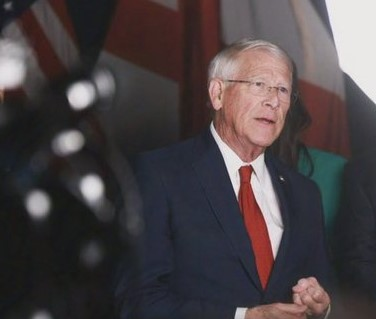
China’s increasing military assertiveness and its alignment with Russia, Iran, and North Korea were key topics at a recent high-stakes US Senate hearing on defense spending. The Senate Armed Services Committee Chairman, Roger Wicker, highlighted the intense competition with Beijing, stating that the US faces its most precarious security environment since World War II. Wicker emphasized the need to compete with Xi Jinping and the Chinese Communist Party to determine the future global leadership.
Describing China as part of an “axis of aggressors” along with Russia, Iran, and North Korea, Wicker expressed concerns about these countries opposing American interests and those of democratic allies. Secretary of War Pete Hegseth outlined a proposed $1.5 trillion defense budget aimed at addressing a complex threat environment, with a focus on countering China. Hegseth stressed the importance of rebuilding a military that instills fear in adversaries through investments in drones, missile defense, and advanced technologies.
Joint Chiefs Chairman Dan Caine highlighted China’s aggressive integration of artificial intelligence (AI) across its military operations. He emphasized China’s efforts to incorporate AI into various warfighting functions, including command, intelligence, and combat operations. Caine underscored the critical need for the US to maintain technological superiority to avoid potential risks posed by any erosion of this advantage.
Lawmakers raised concerns about China closely monitoring US military activities worldwide. Caine noted that China is likely observing recent US operations, including those in Iran. Both senators and Pentagon leadership expressed worries about supply chain vulnerabilities and reliance on China for essential materials and technologies. Hegseth emphasized the necessity of reducing dependence on China for critical components in the US supply chain.
The strategic implications of these developments are significant for India, as the US framing China as a primary long-term threat reinforces the strategic alignment between the US and India in the Indo-Pacific region.
