


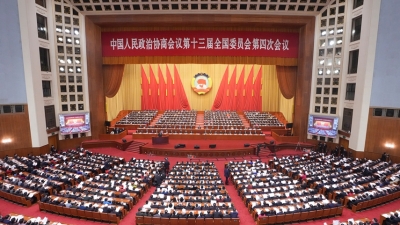
China’s approach towards India involves a strategic mix of political engagement, territorial encroachment, and proxy support, aiming to limit India’s choices. A recent report delved into the Communist Party of China’s activities in New Delhi, emphasizing their strategy to build alliances abroad and counter criticism of China’s actions.
The report highlighted China’s tactics of incrementally seizing territory along the Line of Actual Control and backing Pakistan against India. These actions collectively aim to weaken India internally, challenge its sovereignty externally, and confine it regionally. To counter this, a comprehensive response involving military readiness, political awareness, and global partnerships is suggested.
The delegation led by Sun Haiyan from the International Department of the Communist Party of China visited New Delhi from January 12-14 with strategic objectives. Their goal was to ease resistance, leverage India’s diversity, and establish channels to moderate India’s reactions to Chinese assertiveness. This mirrors China’s similar approaches in other countries, such as Australia and Nepal.
China’s strategy includes incremental territorial advances at the border, termed “salami slicing,” through activities like road construction and patrols along the Line of Actual Control. These actions aim to alter ground realities gradually without provoking a full-scale conflict, complicating India’s responses and expanding Chinese influence strategically. This method is likened to China’s maritime tactics of gradual militarization to alter territorial control.
Additionally, China’s consistent support for Pakistan serves as a proxy tactic to keep India preoccupied on multiple fronts. By providing military aid, economic investments, and diplomatic backing to Pakistan, China diverts India’s focus from solely countering Chinese influence. This three-pronged pressure – internal influence, border encroachment, and proxy backing – aims to encircle India regionally and limit its strategic maneuverability.
To counter these challenges, a multi-dimensional approach involving military preparedness, political astuteness, and narrative counter-strategies is essential. The international community is urged to recognize the limitations of existing legal frameworks in addressing such disputes, particularly in the Himalayan region, emphasizing the need for robust dispute resolution mechanisms.
