


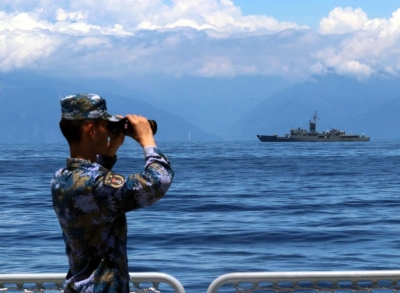
China’s naval diplomacy is undergoing a significant shift towards focusing more on domestic activities, indicating internal challenges within the Chinese Communist Party (CCP). By emphasizing port visits within its own territory over international deployments, Beijing aims to reassure its party members and citizens. However, this change also reveals vulnerabilities within the CCP, as it grapples with declining confidence and internal divisions.
The CCP’s reliance on symbolic gestures and reduced global naval engagement highlights a growing sense of insecurity within the party. The shift towards domestic port calls has become more pronounced, with the Chinese Navy conducting a notable increase in such visits in recent years. This departure from projecting strength internationally to domestic showcases signifies a shift in the CCP’s approach to maintaining control and loyalty among its base.
The report underscores the CCP’s fear of overextension and the risks associated with deploying ships abroad. By retreating from international waters, the party hopes to rebuild support among its members but faces challenges, especially from younger generations critical of isolationist policies. The focus on domestic naval displays may inadvertently reinforce the perception of the CCP’s disconnect from a globally interconnected world, potentially undermining its credibility and relevance.
Highlighting the broader implications of China’s naval diplomacy, the report emphasizes that the country’s ability to navigate the evolving global landscape and address citizen disillusionment will be crucial. The success of China’s maritime strategy will not solely depend on the display of warships domestically but on its capacity to adapt to changing geopolitical dynamics and societal expectations.
