


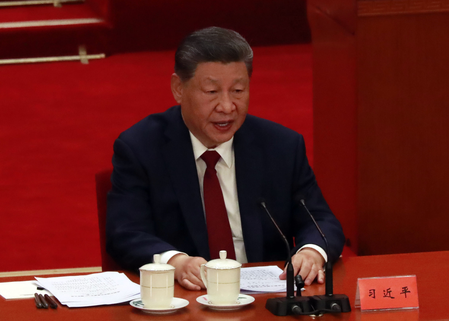
China’s President Xi Jinping has been actively promoting the attraction of foreign investments in high-level meetings with global leaders and corporate executives. Notable figures he has engaged with recently include Elon Musk of Tesla, Jensen Huang of Nvidia, Tim Cook of Apple, Larry Fink of BlackRock, and Kelly Ortberg of Boeing. Jinping has expressed China’s commitment to further opening up its economy, emphasizing the mutually beneficial nature of China-U.S. economic relations.
Despite these efforts, China has introduced laws requiring its citizens to report suspicious activities to the government, potentially impacting foreign investment sentiment. These laws mandate ordinary people to serve as informants for state security, raising concerns among foreign companies about investing in a country where citizens are compelled to act as intelligence assets.
The imposition of these laws could deter foreign companies, especially those dealing with advanced technologies, from investing in China. The heightened scrutiny and interference from the Chinese government on high-value technologies may lead companies to explore alternative, more secure investment options. This poses a significant challenge for China, as the Chinese Communist Party historically prioritizes maintaining its dominant role in the country’s power dynamics.
