


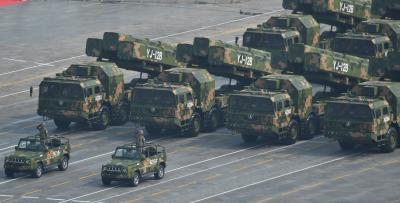
China has transitioned from former President Jiang Zemin’s peaceful narrative to current leader Xi Jinping’s assertive nuclear stance, signaling a departure from Jiang’s principles outlined during his 1998 State Visit to Japan. The concept of a “peaceful rise” has been replaced by a strategy emphasizing deterrence and dominance, raising concerns globally about Beijing’s intentions. Recent reports highlight China’s rapid nuclear armament and aggressive military posture under Xi, moving away from Jiang’s language of restraint towards coercive power projection.
In contrast to Jiang’s commitment to non-belligerence and cooperation, Xi’s administration has seen a significant increase in China’s operational nuclear warhead stockpile, rising from the low 200s in 2020 to over 600 today. Projections suggest this arsenal could surpass 1,000 warheads by 2030, with developments in hypersonic glide vehicles and missile technology marking a departure from China’s previous restrained approach. This shift towards regional coercion is evident in China’s military activities in areas like the South China Sea, Taiwan Strait, and East China Sea, posing threats to neighboring nations.
Xi Jinping’s leadership has shifted towards nationalism and military strength as tools to consolidate the Chinese Communist Party’s authority, diverging from Jiang’s focus on economic growth and global integration. While Jiang aimed to integrate China into the international order, Xi’s agenda appears centered on reshaping it to align with China’s strategic interests. This change reflects Xi’s vision of a multipolar world characterized by competition, where nuclear deterrence plays a pivotal role in safeguarding China’s influence and survival.
The evolution from Jiang’s diplomatic reassurances of “no hegemony” to Xi’s pursuit of expanded strategic power through nuclear capabilities has raised doubts about China’s credibility and commitment to peaceful coexistence. This shift not only fuels regional militarization but also undermines trust in the Chinese Communist Party’s pledges, impacting China’s standing in the global community.
