


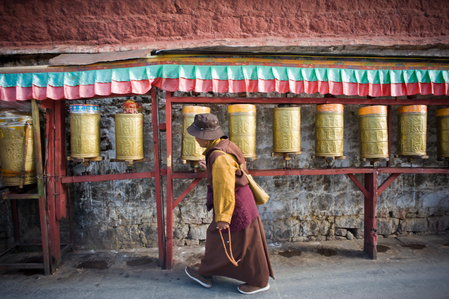
The Chinese government has imposed a ban preventing children under 18 years old from entering monasteries in Tibet. Notices at a monastery entrance in Kham explicitly state this restriction, raising concerns about Tibetan cultural and religious rights. This move aligns with China’s longstanding policy of limiting minorities’ involvement in religious practices.
During the winter holiday period, when Tibetan schools are closed, many children traditionally visit monasteries with their families. However, the recent ban prohibits children from entering monasteries even when accompanied by parents. Sonam Tobgyal from Tibet Watch views this decision as part of a systematic effort to undermine Tibetan cultural heritage.
Tobgyal highlights various Chinese policies in Tibet, including compulsory boarding schools and restrictions on Tibetan language instruction and monastery visits during holidays. These measures are seen as an attempt to erase Tibetan cultural influences from young Tibetans’ lives. State-run schools for Tibetan children are closely monitored by the United Front Work Department of the Chinese Communist Party, promoting assimilation into Chinese language and culture.
Critics argue that these policies aim to reshape Tibetan children’s identities to align with Chinese norms. Parents have observed children speaking Chinese at home, responding in Chinese, and showing reluctance to visit monasteries during breaks. The measures are viewed as part of a broader effort to foster Chinese language, thinking, and loyalty among Tibetan youth.
