


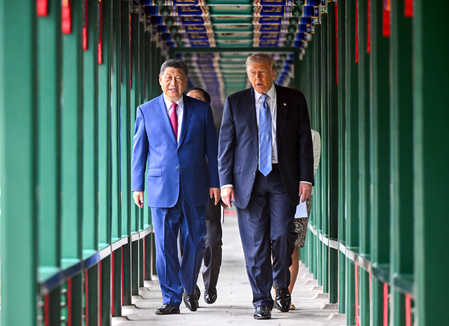
Chinese President Xi Jinping cautioned about potential clashes and conflicts over Taiwan during a recent discussion with US President Donald Trump in Beijing. The warning emphasized the underlying tension in US-China relations, where Taiwan remains a critical issue. This concern stems from the ambiguous status of Taiwan under the US’ ‘One China’ policy, creating a longstanding fault line in international relations.
Xi’s message to Trump echoes past Chinese leaders’ stance on Taiwan, highlighting its significance as a core interest for Beijing. Taiwan’s strategic location, semiconductor industry, and political implications make it a focal point in global politics. The issue not only affects US-China relations but also plays a crucial role in regional stability and alliance credibility.
The Chinese Communist Party’s legitimacy is tied to the eventual reunification with Taiwan, making any compromise on sovereignty a sensitive matter. Taiwan’s position in the Indo-Pacific region influences not only US commitments to its allies but also the broader geopolitical landscape. Despite efforts to address various cooperation areas in US-China summits, Taiwan’s status remains a persistent challenge that underscores the sovereignty and legitimacy contest between the two nations.
