


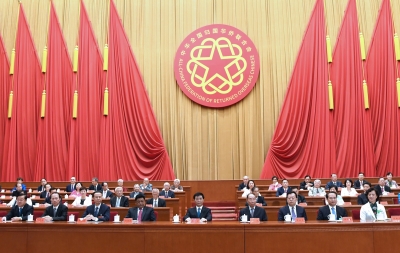
The recent cases involving Chinese transnational operations in the United States, United Kingdom, and Norway underscore Beijing’s extensive global campaign of repression targeting critics abroad. These actions aim to monitor, harass, and silence dissent beyond borders and democratic protections. In a significant development on May 7, Peter Wai and Bill Yuen were convicted in the UK under the National Security Act for aiding a foreign intelligence service, sending a clear message against Chinese Communist Party repression on British soil.
Democracies are individually combating transnational repression, with varying legal frameworks and enforcement capabilities. While the UK enacted the National Security Act in 2023, other allies are progressing at different paces. Beijing’s networks strategically transcend borders, exploiting jurisdictional gaps, utilizing embassies and proxies for intelligence sharing, and adapting swiftly to circumvent obstacles.
Addressing the challenge of Beijing’s transnational repression requires collaborative efforts among like-minded states. The ‘Five Eyes’ intelligence alliance, NATO, and the Summit for Democracy provide platforms for information exchange and coordinated responses. It is crucial to utilize these mechanisms collectively to combat transnational repression as a shared security threat, rather than treating it solely as a domestic law enforcement issue in each country.
There is a growing alignment among democracies in countering transnational repression associated with China, offering hope to individuals like Hong Kongers, Uyghurs, and Tibetans seeking refuge in democratic nations. The defense of these vulnerable groups is gradually becoming more systematic, shared, and enduring, signaling a positive shift towards safeguarding those targeted by repression.
