


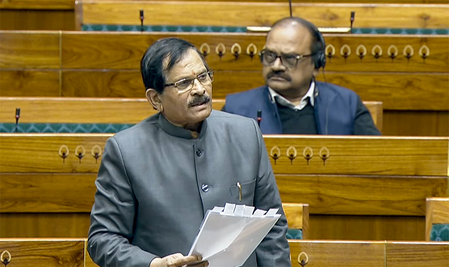
The Indian government disclosed to Parliament that as of July 12, 2026, the coal reserves available for use in the nation’s thermal power stations totaled 42.8 million tonnes, enough for a 14-day period at an 85% Plant Load Factor (PLF). The Minister of State for Power, Shripad Naik, mentioned in a written response in the Rajya Sabha that maintenance of thermal units is strategically planned, considering the demand variations across different months. It is customary to minimize scheduled maintenance during peak demand months.
The Central Electricity Authority (CEA) closely oversees and allows deferments on a case-by-case basis, depending on the technical parameters of the plant, if a surge in demand necessitates it. The coal-based power generation capacity in India stands at approximately 230.8 GW, contributing 69.54% to the total electricity supplied from April to June 2026. Moreover, the peak generation from these plants reaches about 188.8 GW during non-solar peak-demand hours, constituting around 75% of the total generation of 251.4 GW.
To facilitate the integration of renewable energy sources into the power grid, the “Central Electricity Authority (Flexible Operation of Coal-based Thermal Power Generating Units) Regulations, 2023” were enforced on January 30, 2023. These regulations mandate all coal-based thermal power units to achieve a minimum technical efficiency level of 40% as per the specified phasing plan by the CEA. The Indian government has implemented various measures to ensure uninterrupted thermal power generation during peak-demand periods. In the fiscal year 2025-26, 9,470 MW of thermal capacity was added, with an additional 2,260 MW commissioned in the current financial year.
Coal supply to thermal power plants is vigilantly monitored daily by a joint committee comprising representatives from the Ministry of Power, Railways, and the Ministry of Coal. Emphasis is placed on the swift movement of coal rakes and dispatch to power stations. An Inter-Ministerial Committee (IMC), including the Chairman of the Railway Board, the Secretary of the Ministry of Coal, and the Secretary of the Ministry of Power, convenes regularly to oversee coal supplies to thermal power plants. To supplement power generation during non-solar hours, 2,669 MW of Battery Energy Storage Systems (BESS) and 7,426 MW of Pumped Storage Projects (PSPs) have been commissioned to date. These energy storage systems store surplus power generated during solar hours and utilize it primarily during non-solar hours.
