


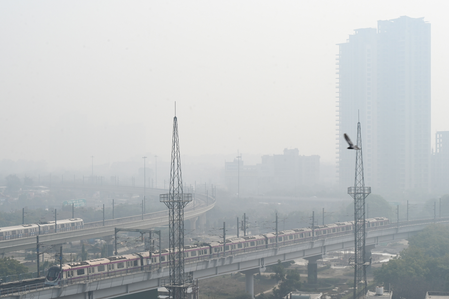
Aiming to reduce air pollution during the harvest season, the Commission for Air Quality Management (CAQM) has instructed Punjab, Haryana, and Uttar Pradesh to stop wheat stubble burning. The states have been advised to form “Parali Protection Force” at the district level and conduct night patrols to enforce their Action Plans for preventing straw burning.
The CAQM has urged the Governments of Delhi and Rajasthan to take necessary steps to eliminate wheat stubble burning incidents. These states are required to submit monthly progress reports to the Commission for monitoring and further action. According to ISRO/IARI data, Punjab, Haryana, and NCR districts of Uttar Pradesh witnessed 10,207, 1,832, and 259 fire events, respectively, during the wheat harvest season.
Satellite monitoring during the wheat harvesting season in 2025 revealed a significant number of fire incidents, emphasizing the need for targeted interventions. The CAQM has directed the states to map out wheat stubble management plans for each farm, including crop diversification and proper residue management techniques.
States have been asked to assign nodal officers to groups of farmers for effective monitoring, with a maximum of 100 farmers per officer. The CAQM also emphasized the need for timely availability of crop residue management machines to farmers during peak harvesting times, facilitated through a mobile app. Additionally, the states are required to ensure adequate storage facilities for wheat straw to minimize fire-related losses.
To promote the use of wheat straw as fodder and in other applications, the CAQM has instructed the formulation of District Level Supply Chain Management Plans. These plans should consider demand and supply dynamics throughout the year, ensuring a continuous supply chain for wheat straw utilization.
