


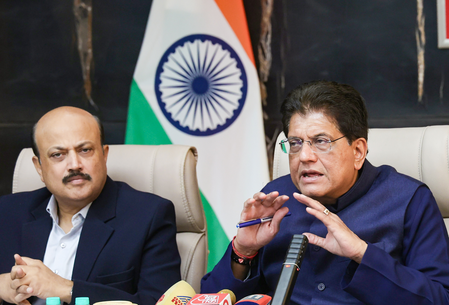
Legally binding commitments on professional services under various free trade agreements (FTAs) are poised to open up global markets for Indian professional services, as highlighted in an official statement. Commerce Secretary Rajesh Agrawal stressed the significance of improved stakeholder coordination, reforms in the domestic ecosystem, and these commitments under different FTAs. Addressing the ‘Chintan Shivir on Professional Services,’ Agrawal also emphasized the vital role of services trade in India’s economic progress, citing its substantial contribution to domestic value addition alongside merchandise exports.
Efforts to tap into India’s demographic dividend and cater to the increasing global demand for professional services were underscored by Agrawal. He emphasized the need to embrace global best practices, enhance professionals’ skills in line with evolving global market demands and technological advancements. Agrawal noted that increased openness in international trade of professional services would boost India’s economic competitiveness, urging professional bodies to engage in international conferences for knowledge sharing and fostering collaboration.
The ‘Chintan Shivir’ served as a platform for professional bodies to exchange insights on global best practices and local approaches. Discussions revolved around identifying areas where professional bodies could reassess existing rules and regulations governing professional practice. The goal is to adapt training and skill enhancement programs to align with advancements in artificial intelligence and technology, as stated in a Commerce Ministry release.
Acknowledgment was given to the ICAI playbook for its market-oriented infrastructure, including chapters, an international directorate, and certification courses focusing on technology and AI. The Indian Nursing Council’s efforts to enhance Indian nurses’ access to global markets were recognized, especially considering regulatory hurdles in advanced economies in the healthcare sector. Talks on Mutual Recognition Agreements (MRAs) highlighted challenges in entering into MRAs and maximizing existing ones effectively.
Discussions during the event also delved into leveraging FTAs to future-proof digital delivery of professional services, mobility-related provisions, and domestic regulations concerning qualification requirements and procedures. The role of MRAs in India’s future professional services export strategy, particularly in the context of Global Capability Centres and the rapid expansion of digitally delivered services, was a key focus.
