


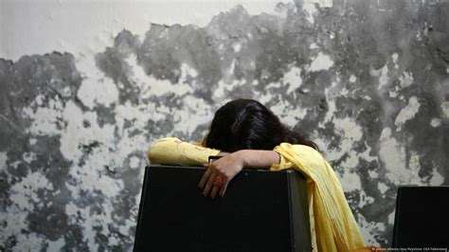
A federal court in Pakistan has granted custody of Maria Shahbaz, a 13-year-old Christian girl, to a Muslim man who abducted her, converted her to Islam, and married her. The judges dismissed the birth certificate provided by Maria’s parents as proof of her age, despite earlier rulings that the marriage was illegal, as reported by The European Conservative. Maria’s parents, particularly her father Shahbaz Masih, a driver, expressed deep distress over the court’s decision. Maria was kidnapped by a neighbor on July 29 last year while she was on her way to a nearby shop, and her family has been pleading for legal assistance to locate her since then.
The case of Maria Shahbaz is not an isolated incident in Pakistan. Every year, around 1,000 girls and young women from religious minorities, including Christians, experience abduction, rape, forced marriage to much older abductors, conversion to Islam, and various forms of abuse. Uzay Bulut, a Turkish journalist, highlighted the plight of these victims in a report for The European Conservative, emphasizing that the survivors, some as young as seven and including those with disabilities, often face social stigma, PTSD, and shame due to the prevalent honor-based culture in Pakistan. The police’s inaction and the courts’ failure to deliver justice further exacerbate the suffering of these individuals.
Pakistan’s ranking as the eighth country on the 2026 World Watch List of Open Doors underscores the severity of Christian persecution in the nation. Christian women are particularly vulnerable to acid attacks, workplace harassment, blasphemy accusations, and honor killings. Additionally, many Christian women are trapped in debt-bonded labor, such as working in brick kilns, where they are subjected to further exploitation and sexual violence. Christian men in Pakistan also confront grave challenges, including blasphemy allegations, false imprisonment, torture, and execution. Accusations of insulting Islam can lead to murders, and entire families suffer the consequences of baseless charges, with men and boys compelled to undertake hazardous or low-status jobs.
The situation for Christian children in Pakistan is equally concerning. They are often required to attend Islamic teachings at local madrassas while Christian instruction is limited to Sunday services. Christian parents, fearing pressure to convert their children to Islam, discourage discussions about their faith. Discrimination against Christian children is pervasive, with instances where they are prohibited from using the same water fountains as their Muslim peers to avoid “defiling” the water. Moreover, Christian children frequently face bullying and are assigned menial tasks like cleaning latrines or sweeping floors due to societal prejudices that associate Christianity with lower social status.
