


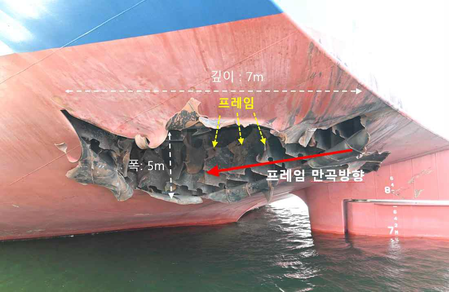
The debris from airborne objects that struck an HMM-operated vessel in the Strait of Hormuz last week has reached South Korea for examination, as confirmed by the foreign ministry. Following consultations with the United Arab Emirates government, the debris will undergo detailed analysis by specialized agencies. An on-site inspection revealed that the HMM Namu, a Panama-flagged cargo ship, was hit by two airborne objects on May 4, resulting in an explosion and fire onboard.
The South Korean government has not yet determined the nature of the objects or the responsible party behind the attack. A senior official mentioned that the likelihood of the attack originating from a source other than Iran was deemed low. Once the perpetrator is identified, a diplomatic response will be considered necessary. This incident marks the 33rd attack on a civilian vessel since the conflict in the Middle East began with the US and Israel’s actions against Iran on February 28.
In response to the incident, Seoul is evaluating previous responses of other nations to similar attacks. A specialized agency under the defense ministry will conduct a thorough analysis of the debris to ascertain the specifics of the attack. The Agency for Defence Development, a state defense research institute, is expected to lead the analysis process.
Experts have suggested that the confirmed strike on the South Korean-operated cargo vessel in the Strait of Hormuz may prompt Seoul to contemplate participating in US-led missions aimed at upholding navigation freedom in the strait. The foreign ministry disclosed that two unidentified flying objects struck the Namu in succession on May 4, leading to an explosion and fire while the vessel was stranded in the strait.
