


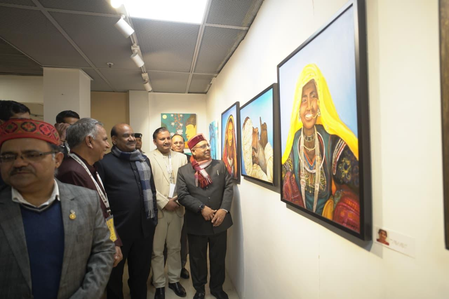
Delhi Assembly Speaker Vijender Gupta highlighted the significance of language as a link between India’s past and future during the Third International Indian Language Conference. He stressed the continuity and diversity seen in the history of Indian languages, shaped by interactions among various communities and knowledge traditions. Gupta noted that even dormant languages have contributed intellectual legacies that influence present-day languages.
The conference, themed ‘Languages, Literature, Youth, and Technology’, united renowned scholars, writers, linguists, and cultural thinkers from India and abroad. Lok Sabha Speaker Om Birla delivered the keynote address at the closing ceremony, which was overseen by Ram Bahadur Rai, President of the Indira Gandhi National Centre for the Arts (IGNCA).
Gupta highlighted how Indians engage with multiple languages daily, tailored for different communication contexts, fostering listening skills and inclusivity among diverse linguistic groups. He praised the harmonious coexistence of various linguistic families in India, viewing linguistic diversity as a platform for dialogue rather than division.
Reflecting on the evolution of writing and oral traditions in Indian languages, Gupta emphasized the preservation of knowledge through narratives, songs, and rituals in both written and unwritten forms. He underscored that the essence of a language transcends literary records, encompassing lived experiences and cultural memories within communities.
The conference, featuring 43 sessions spanning exhibitions, film screenings, performances, and presentations, provided a holistic exploration of language as a medium of thought and expression. With global participation from scholars representing 70 countries, Gupta lauded the event for underscoring the contemporary global relevance of Indian languages in intellectual discourse.
