


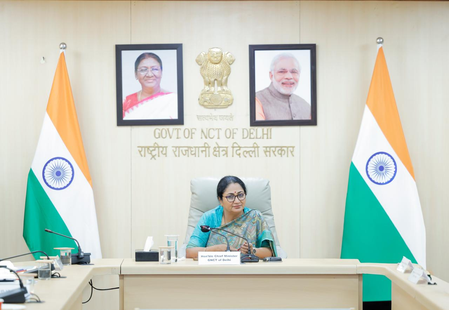
Chief Minister Rekha Gupta has introduced the ‘Delhi Semiconductor Policy’ in a bid to establish Delhi as a significant center for semiconductor design, advanced research, development, assembly, and related activities. This initiative aims to foster high-value technology sectors within the capital, aligning with Prime Minister Narendra Modi’s vision for a self-reliant India.
The policy framework, as highlighted by Chief Minister Rekha Gupta, focuses on promoting a balanced and structured development of the semiconductor sector, recognizing its crucial role in the global economy. It includes a mix of financial and non-financial incentives to enhance business operations, innovation, and the overall industry ecosystem.
Structured around five key pillars, the proposed policy emphasizes semiconductor design, research, innovation, manufacturing activities like Assembly, Testing, Marking, and Packaging (ATMP), talent development, and support for startups and the industrial ecosystem. It aims to bolster Delhi’s presence in high-value segments of the semiconductor value chain, attracting investments and fostering ancillary industries linked to testing, packaging, and semiconductor inputs.
The ‘Delhi Semiconductor Policy’ is anticipated to create quality job opportunities in chip design, semiconductor research, and advanced packaging, while also focusing on skill development through targeted training programs and partnerships between industry and academia. By offering targeted incentives, reducing operational costs, and creating a favorable business environment, the policy seeks to encourage private investment and support the growth of the semiconductor industry in Delhi.
