


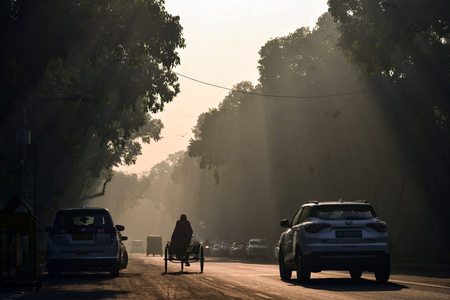
Delhi-National Capital Region (NCR) saw a notable enhancement in air quality recently, attributed to a combination of rain, the highest single-day January rainfall in three years, and strong winds on Saturday. These weather conditions effectively cleared the toxic smog and pollutants that had been lingering over the area for weeks. The capital’s Air Quality Index (AQI) on Sunday morning stood at 152, marking the first ‘moderate’ air quality level in weeks, as per data from the Central Pollution Control Board (CPCB) SAMEER app at 6.05 a.m.
On Saturday, Delhi recorded a 24-hour average AQI of 192, categorizing it as ‘moderate’ by 4 p.m. Subsequently, by 10 p.m., the AQI further improved to 163, aided by gusty winds dispersing airborne pollutants. Most parts of the city reported moderate air quality, with only a few areas showing ‘poor’ AQI levels. Notably, NSIT Dwarka was the sole area with an AQI below 100, indicating cleaner air. Authorities attribute this improvement primarily to the combined impact of rainfall and strong north-westerly winds sweeping across the region.
Cold wave conditions have returned to North India, encompassing Punjab, Haryana, Rajasthan, Uttar Pradesh, and Delhi. The India Meteorological Department (IMD) predicts minimum temperatures in Delhi to range from 4 to 6 degrees Celsius. Nighttime temperatures are expected to remain low until Tuesday, with a slight rise to 8-10 degrees Celsius. Maximum temperatures in the upcoming days are forecasted to range between 18 and 21 degrees Celsius. The IMD has issued a yellow alert for potential rain and thunderstorms in Delhi, urging caution among residents. Meteorologists warn that although air quality has temporarily improved, the city could face pollution surges if dry conditions resume post-rainfall.
The recent weather conditions brought relief to Delhi, offering a temporary break from the prolonged smog. However, authorities stress the importance of continuous monitoring and pollution control measures to uphold cleaner air.
