


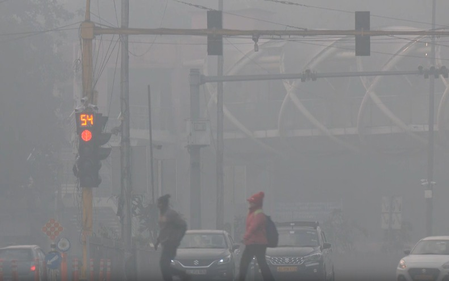
People in Delhi-NCR are experiencing harsh weather conditions with a combination of biting cold and severe air pollution. The India Meteorological Department (IMD) has issued orange and yellow alerts due to an ongoing cold wave, while the Air Quality Index (AQI) remains alarmingly high in various areas. The cold wave is expected to persist for the next couple of days, with temperatures ranging from a maximum of 20 degrees Celsius to a minimum of 4 degrees Celsius.
The cold winds, coupled with high humidity levels reaching up to 97 to 98 per cent during morning hours, have intensified the cold, making it feel even harsher than the actual temperature. Although a slight increase in temperature is predicted from January 15 onwards, with the minimum temperature likely to rise to around 6 degrees Celsius, moderate to dense fog is anticipated during early morning and night hours, potentially impacting visibility and transportation.
The air quality situation in Delhi-NCR remains a significant concern, with the Air Quality Index surpassing the 400 mark in several parts of the national capital, categorizing the air quality as ‘severe’. Monitoring stations operated by the Central Pollution Control Board (CPCB) and State Pollution Control Boards have reported alarming AQI levels in various areas. For instance, Anand Vihar recorded an AQI of 411, Rohini 397, Chandni Chowk 380, and other locations also reported high pollution levels.
In neighboring NCR cities like Noida and Ghaziabad, air quality levels are equally worrying. Noida recorded AQI levels ranging from 307 to 357 in different sectors, while Ghaziabad’s Indirapuram area reported an AQI of 324. Union Minister for Environment, Forest and Climate Change Bhupender Yadav recently chaired a meeting to review the Delhi government’s action plans for combating air pollution in the NCR region. Health experts caution that prolonged exposure to such polluted air can pose health risks, especially for vulnerable groups like children and the elderly.
