


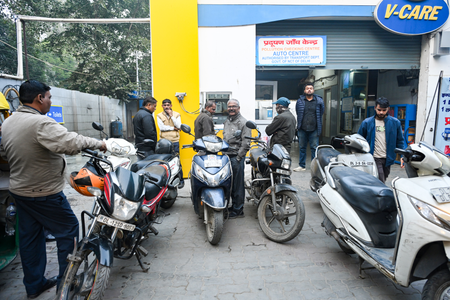
Delhi is witnessing a significant increase in enforcement actions against polluting vehicles, particularly for violations related to Pollution Under Control Certificates (PUCC). The number of PUCC-related prosecutions surged by over 40% in 2025 compared to the previous year, with cases rising from 5,97,772 in 2024 to 8,62,944 in 2025. This rise is attributed to stricter monitoring and enforcement efforts by traffic authorities.
The Additional Commissioner of Police, Traffic, Dinesh Kumar Gupta, highlighted that the intensified enforcement was primarily focused on Delhi’s border points and involved round-the-clock deployment of traffic personnel. Gupta mentioned that the deployment was in line with directives from the Commission for Air Quality Management (CAQM), aiming to tackle the city’s air pollution crisis.
The enforcement drive was intensified amidst recurring spells of ‘poor’ and ‘severe’ air quality in Delhi, where vehicular emissions are a major pollution source. Officials emphasized that frequent roadside checks and sustained crackdowns on vehicles lacking valid PUCCs significantly contributed to the increased number of prosecutions. Moreover, special health camps were organized for traffic personnel during winter months to address health concerns due to heightened pollution levels.
Authorities affirmed their commitment to ongoing enforcement and monitoring actions as part of broader initiatives to combat vehicular pollution and enhance air quality in the capital. The government’s implementation of various stages of the Graded Response Action Plan (GRAP) led to extensive checks at Delhi’s borders, restrictions on polluting vehicles, and imposition of fines on non-compliant trucks, buses, and light vehicles.
