


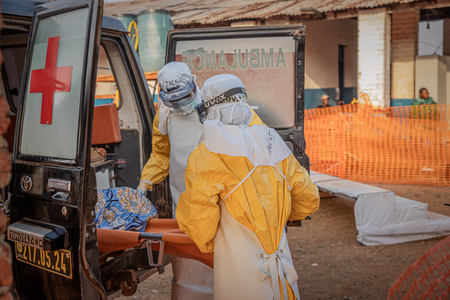
The Democratic Republic of the Congo (DRC) has confirmed 1,528 cases of Ebola, with 492 deaths reported as the country grapples with the ongoing outbreak. Public health authorities in the DRC disclosed that 239 patients have successfully recovered, while 628 confirmed cases are currently under isolation or receiving treatment. The situation report highlighted a surge in weekly confirmed cases, with epidemiological weeks 25 and 26 registering over 300 cases each, signaling sustained community transmission.
Authorities in the DRC face various challenges, including community resistance to post-mortem sampling, inadequate capacity at Ebola treatment centers – notably in the eastern province of North Kivu, subpar contact tracing, delayed laboratory diagnoses, shortages of medical supplies, and security issues hindering access in affected regions. The WHO Regional Director for Africa, Mohamed Yakub Janabi, emphasized the severity of the situation, noting the persistence of transmission in the eastern provinces of Ituri and North Kivu.
The current Ebola outbreak in the DRC is identified as the largest Bundibugyo Ebola outbreak ever documented, with significant hurdles in detecting cases and tracing contacts due to insecurity and armed group activities in affected areas. The outbreak’s impact is exacerbated in Ituri’s mining zones, where the movement of people from outside has heightened the risk of virus spread. A clinical trial has commenced in the DRC to assess potential treatments for Ebola caused by the Bundibugyo virus, for which no approved vaccine or specific treatment currently exists.
In Uganda, 20 confirmed cases, including 15 imported instances, have been reported as of Thursday, with no observed community transmission. The remaining five locally infected individuals were identified during quarantine. Uganda and the DRC have established a collaborative cross-border response mechanism, with a memorandum of understanding signed to enhance surveillance, screening, and treatment capabilities in border regions.
