


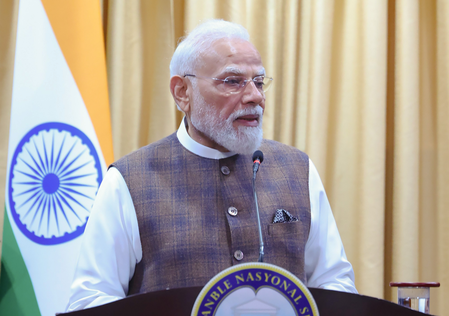
Eleven years ago, Digital India was just an idea, but today, it stands as a pivotal initiative in India, reshaping governance and daily life. Prime Minister Narendra Modi’s vision and determination turned this concept into a national mission that bridged the digital gap and empowered citizens. Two former bureaucrats shared insights on how “Digital India” became a reality under Modi’s leadership.
Soon after taking office in 2014, PM Modi entrusted senior bureaucrat Tapan Ray with spearheading the Digital India and e-Governance agenda. His ambitious goals included building strong digital infrastructure, providing broadband to every village, boosting electronics manufacturing, and ensuring technology benefits reached all. The official launch occurred on July 1, 2015.
Another former bureaucrat, RS Sharma, who played a key role in the preparations, recalled briefing PM Modi on components like DigiLocker and digital KYC processes. PM Modi’s ability to simplify complex tech concepts into everyday language for citizens has been a highlight. Over the past decade, Digital India has brought significant changes, connecting villages, revolutionizing payments through platforms like UPI, and enhancing public services across various sectors.
India now boasts one of the world’s most advanced digital public infrastructures, enabling seamless services in banking, healthcare, education, and governance. What started as a vision in 2014 has become an integral part of Indian life, promoting transparency and efficiency. Digital India’s journey remains a testament to visionary leadership that prioritizes people-centric innovation.
