


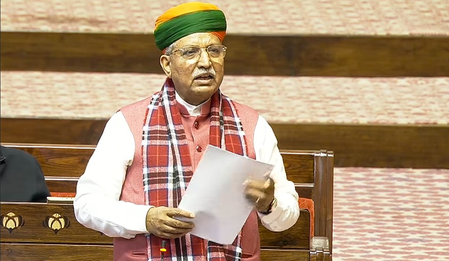
As part of the e-Courts Mission Mode Project, the Indian government has digitised more than 660.36 crore pages of court records and conducted over 3.97 crore hearings via video conferencing. Minister of State for Law and Justice, Arjun Ram Meghwal, highlighted the government’s commitment to modernising the judiciary by allocating Rs 7,210 crore for Phase-III (2023–2027).
This phase aims to digitise legacy and current case records, expand video conferencing to all courts, jails, and hospitals, and extend online courts beyond traffic violations. Additionally, it focuses on establishing e-Sewa Kendras, creating a cloud-based data repository, and utilizing technologies like Artificial Intelligence (AI) and Optical Character Recognition (OCR for case analysis.
Under Phase-III, 2,444 e-Sewa Kendras have been set up to improve citizen service delivery, with approximately 1.07 crore cases filed electronically through the e-Filing platform. Live streaming of court proceedings has been extended to four more High Courts, totaling 11, and all e-Courts portals are now hosted on the National Informatics Centre’s cloud infrastructure.
Advanced AI tools are being integrated into judicial workflows, including an AI/ML-enabled defect identification module and the Legal Research and Analysis Assistant (LegRAA). The Digital Courts platform allows judges to access case-related documents digitally, marking a significant step towards a paperless court system.
