


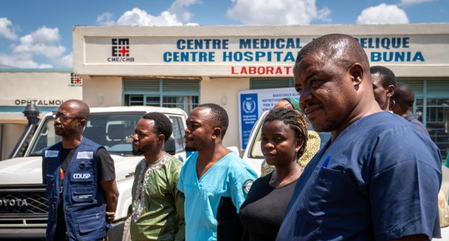
The East African Community (EAC) will host a special virtual gathering of health ministers on June 1-2 to coordinate a regional response to the current Ebola outbreak in parts of East Africa. The meeting aims to devise strategies to manage the outbreak caused by the rare Bundibugyo strain of the Ebola virus, which lacks a licensed vaccine or specific treatment. This high-level session is a crucial step in the collective efforts to address the outbreaks in the Democratic Republic of the Congo (DRC) and Uganda.
The outbreak is primarily concentrated in eastern DRC, notably in the Ituri Province, a region with high mobility that raises concerns about potential further spread across the region. EAC Secretary General Stephen Mbundi emphasized the bloc’s focus on enhancing preparedness through coordinated surveillance, laboratory diagnostics, infection prevention, and risk communication. Collaborating closely with member states, Africa CDC, and the WHO, the EAC aims to prevent cross-border transmission and safeguard public health.
Notable interventions include the deployment of nine mobile laboratories at key border points, the activation of over 180 rapid response experts, and the implementation of specialized training for healthcare workers. Additionally, the EAC is providing personal protective equipment and progressing plans for a regional framework to expedite the approval of Ebola vaccines and diagnostics. Member states are urged to bolster surveillance, public awareness, and emergency readiness measures to combat the outbreak effectively.
The EAC, a regional intergovernmental organization, consists of eight East African countries working together to foster economic, political, and social integration. The member states include Burundi, the Democratic Republic of the Congo, Kenya, Rwanda, Somalia, South Sudan, Tanzania, and Uganda.
