


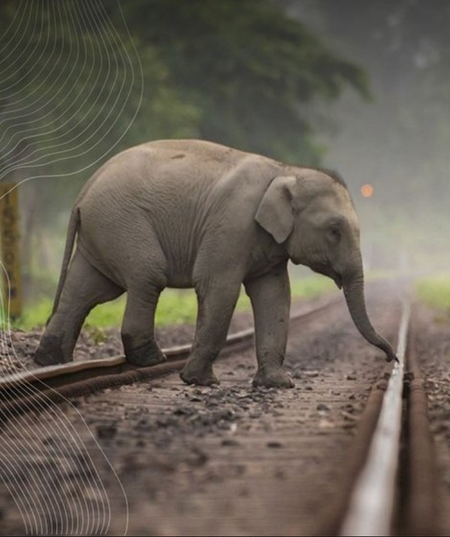
The Environment Ministry, in collaboration with the Ministry of Railways, has pinpointed 110 railway sections in elephant habitats and 17 stretches in two tiger-inhabited states that necessitate 705 mitigation measures to ensure safe animal passage. These measures encompass 503 ramps and level crossings, 72 bridge adjustments, 39 fencing or trenching structures, among others. The aim is to create safe wildlife passages and diminish collisions.
At a national workshop on minimizing elephant fatalities on railway tracks at the Wildlife Institute of India (WII) in Dehradun, officials disclosed the proposed mitigation package for these priority stretches. This package includes various structures like underpasses, overpasses, and exit ramps, totaling 705 mitigation measures. The prioritization of 77 stretches across 14 states was based on wildlife movement patterns and mortality risks.
Through joint field surveys involving Project Elephant, WII, State Forest Departments, and Indian Railways, site-specific ecological conditions were evaluated to recommend tailored mitigation measures. The workshop, held on March 10-11 by the Ministry of Environment, Forest and Climate Change’s Information Project Elephant Division in partnership with WII, convened 40 participants, including representatives from various ministries and conservation experts.
Representatives from key railway zones like East Central Railway, North Eastern Railway, and Southern Railway participated in the workshop, focusing on elephant ecology, infrastructure planning, and biodiversity conservation. The event emphasized the necessity of coordinated planning at wildlife corridor intersections with railways. Discussions covered habitat fragmentation, land-use changes, train speeds, night operations, and seasonal elephant movements as key collision factors.
