


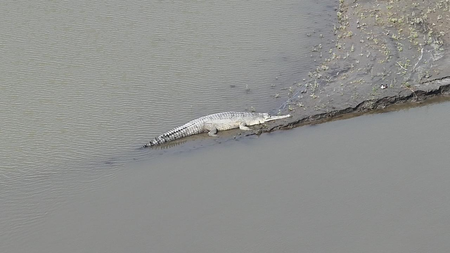
Once feared extinct in Assam’s rivers, the critically endangered gharial has been sighted in Kaziranga National Park, bringing hope to conservationists. The rare sighting of the gharial, known for its long, thin snout, was a significant moment for wildlife conservation in the region. The gharial, a fish-eating reptile, is listed as critically endangered with only 650-1,000 mature breeding individuals left in the wild.
The gharial was spotted basking on a sandbar near the Maite anti-poaching camp area of Burapahar Range in the park. River confluences and sandy banks are preferred habitats for gharials for feeding, basking, and breeding. The sightings have been supported with photographic evidence, indicating a possible continuous presence of the species in Assam.
The Assam Chief Minister’s Office hailed the gharial sighting as a remarkable moment for wildlife conservation efforts. The gharial, considered an apex predator and keystone species, plays a crucial role in regulating fish populations and maintaining the balance of freshwater ecosystems. Conservationists emphasize the importance of preserving the fragile riverine ecosystem to protect the gharial’s habitat.
Recent surveys have documented the presence of a lone female gharial in the Brahmaputra River, alongside diverse aquatic life. Conservation efforts in Kaziranga National Park highlight the potential of the Brahmaputra due to ample fish prey and low human disturbance in protected areas. The park, India’s seventh UNESCO World Heritage Site, is known for its diverse wildlife, including the ‘Big Five’ species.
