


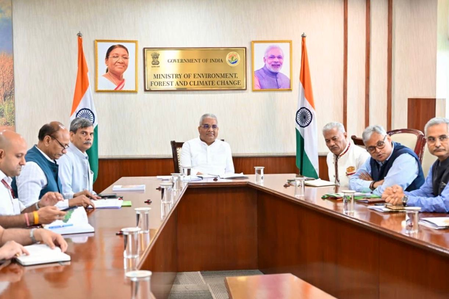
Minister of Environment, Forest and Climate Change Bhupender Yadav revealed that India’s current Cheetah population is 53, with 33 born in India. The review meeting of Project Cheetah, chaired by Yadav, highlighted the survival success of introduced individuals and cubs, showcasing the efficacy of scientific management practices. The strategy focuses on a landscape-based approach for long-term sustainability, with Kuno National Park as the primary site for population establishment.
Preparatory work is underway to expand Project Cheetah to new areas, including the Banni grasslands in Gujarat. These sites, along with Gandhisagar Wildlife Sanctuary, are part of a larger interconnected landscape in central India, facilitating dispersal and genetic exchange. The Minister emphasized the importance of continued scientific guidance and institutional support for the project’s long-term success, aiming to significantly contribute to cheetah conservation and restoration of natural ecosystems in India.
The meeting, attended by senior officials, project experts, and field officers, assessed the progress of Project Cheetah and discussed future actions. Project Cheetah, a pioneering initiative to reintroduce cheetahs in India, began with the translocation of a founder population from Namibia, South Africa, and Botswana. The project’s success is attributed to international cooperation and meticulous scientific planning, positioning it as a globally significant conservation endeavor.
