


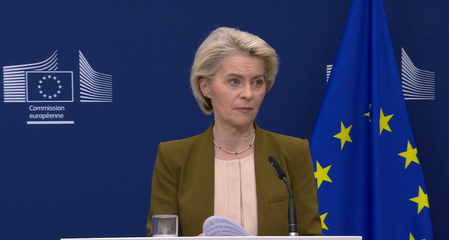
The European Commission has unveiled its 21st set of sanctions targeting Russia, focusing on energy, financial services, crypto, trade, and fisheries. These measures, proposed by European Commission President Ursula von der Leyen, aim to stabilize oil markets by suspending the oil price cap adjustment until January. The sanctions will add 30 more vessels to the existing list, with a focus on vessels supporting the “shadow fleet” through bunkering operations.
The proposed restrictions extend to ports, airports, and refineries involved in Russian oil trading and processing. Additionally, the sale of Liquefied Natural Gas (LNG) tankers to Russia will face limitations. Financially, the Commission plans to expand transaction bans to 31 additional Russian banks and 20 banks, crypto firms, platforms, and oil traders in third countries.
The new trade package includes export restrictions on goods and technologies used by Russia’s military-industrial sector, along with drone-related equipment. Import bans on goods worth approximately 60 million euros, such as specific metals and automotive parts, are also part of the proposal to reduce reliance on Russian imports. Notably, the EU will target Russia’s fisheries sector for the first time, proposing significant import restrictions on certain fish products and a complete ban on others like cod.
Furthermore, a measure to ban entry into the EU for individuals who served in the Russian armed forces since the Ukraine conflict’s onset was announced by von der Leyen. The approval of all EU member states is required before these sanctions can be implemented.
