


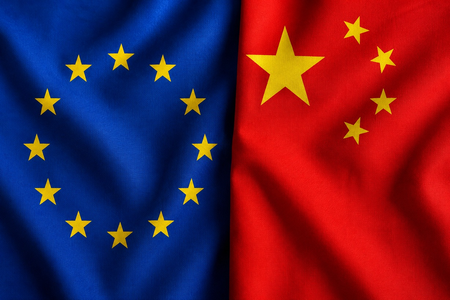
Cheap Chinese products have inundated European markets, emerging as a significant technological competitor that Europeans had underestimated, as per a recent report. The European Union (EU) is reportedly working on a strategy to safeguard its industrial base without provoking a full-blown trade conflict with Beijing, as detailed in Le Monde. China is now actively competing in innovation-centric and high-value production sectors like artificial intelligence (AI) and energy.
Moreover, China currently contributes about 30% of global manufacturing output while only accounting for 13% of global consumption. In another report by Atlantic Council, it was revealed that Chinese car exports to Europe surged by 26% between 2024 and 2025, reaching nearly 1.2 million vehicles, despite the imposition of tariffs just a year earlier.
Despite the introduction of tariffs on Chinese electric vehicles in 2024, including 17% on BYD, 18.8% on Geely, and over 35% on SAIC, the tariffs did not notably impede Chinese market penetration. Brussels initiated thirty-three trade investigations in 2024 and a similar number in 2025, with many focusing on China, according to the report.
French President Emmanuel Macron recently cautioned that Europe might eventually need to sever ties with China in strategic sectors if Beijing does not address the widening trade imbalances. Paris has also been advocating for the inclusion of currency distortions and global imbalances on the Group of Seven (G7) agenda.
Starting July this year, the EU plans to reduce tariff-free steel quotas by 47%, from approximately 33 million tonnes to 18.3 million, and will double out-of-quota duties from 25% to 50% until 2031. The EU is also transitioning from conventional trade defense to industrial policy, with discussions underway on a significant proposal known as the “overcapacity instrument,” which would essentially establish the EU’s equivalent of Section 301 of the US Trade Act.
