


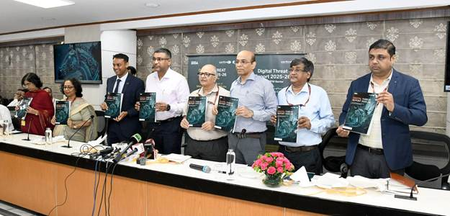
Experts have raised concerns about the growing AI asymmetry in financial institutions, where tasks that once demanded specialized teams and significant resources can now be executed swiftly by less-equipped threat actors. This imbalance is accelerating offensive capabilities beyond defensive and regulatory measures, posing a significant challenge. The IT Ministry, along with CERT-In, CSIRT-Fin, and SISA, unveiled the ‘Digital Threat Report 2025–26’ for the BFSI and payments sector, emphasizing the need for collaborative efforts to enhance digital trust.
Trusted partnerships between public bodies and industry players are crucial in combating the rising sophistication of cyber threats. The report, a joint effort by CERT-In, CSIRT-Fin, and SISA, aims to bolster national cyber resilience and global cybersecurity knowledge. Drawing on DFIR research and adversarial AI analysis, the report reveals that most predictions from the previous edition have already materialized, underscoring the shrinking gap between threat emergence and exploitation.
Dharshan Shanthamurthy, CEO of SISA, highlighted the industry’s evolving defense landscape, where the time lag between innovation and exploitation has significantly reduced. This shift necessitates a fundamental change in how the sector approaches its security posture. The report serves as an insightful guide for financial institutions, regulators, and cybersecurity leaders, offering an overview of the evolving threats in the financial and digital payment realms.
Dr. Sanjay Bahl, Director General of CERT-In, stressed the importance of shared responsibility in enhancing cyber resilience as India’s financial ecosystem becomes more interconnected and technology-driven. Collaboration among institutions, regulators, and the digital supply chain is crucial to fortify defenses against cyber threats.
