


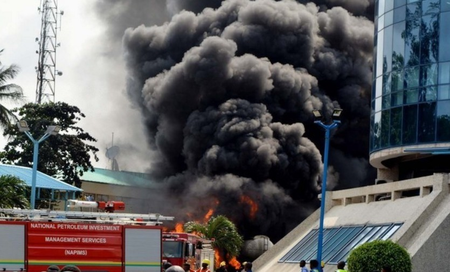
An explosion rocked a mosque in Maiduguri, Nigeria, during evening prayers, resulting in the deaths of at least ten worshippers. The incident, which occurred on Wednesday evening, has reignited concerns about militant violence in the region. No group has claimed responsibility for the blast as of now.
Militia leader Babakura Kolo described the explosion as a suspected bombing, while officials highlighted past instances of militants targeting mosques and public places in Maiduguri using explosives. Witnesses reported that the blast took place inside a crowded mosque in the Gamboru Market area where worshippers had gathered for prayers.
The sudden explosion caused panic among worshippers, leading to chaos as people tried to seek safety amidst the debris and smoke. Preliminary assessments suggest that the explosive device may have been planted inside the mosque and detonated during the prayer service. Some witnesses suggested the possibility of a suicide bomber, although this has not been officially confirmed by authorities.
Maiduguri, the capital of Borno state, has been a focal point of the insurgency led by Boko Haram and its offshoot, the Islamic State West Africa Province. While the broader region has seen frequent violence, Maiduguri itself has not faced a major attack in recent years, making this incident particularly alarming for residents and security forces.
Boko Haram initiated its insurgency in Borno state in 2009 with the aim of establishing an Islamic caliphate. Despite sustained military efforts by Nigerian forces and regional cooperation, sporadic attacks continue to pose a significant threat to civilians in northeastern Nigeria.
The jihadist insurgency in Nigeria, ongoing since 2009, has resulted in approximately 40,000 fatalities and displaced around two million people in the country’s northeast, according to United Nations estimates. The conflict has caused immense humanitarian suffering, with communities repeatedly displaced by violence.
Although the frequency of attacks has decreased compared to the conflict’s peak, the violence has spilled over into neighboring countries like Niger, Chad, and Cameroon, complicating regional security efforts. Concerns are rising about a potential resurgence of violence in northeastern Nigeria as insurgent groups maintain the capacity to carry out deadly attacks despite sustained military pressure.
