


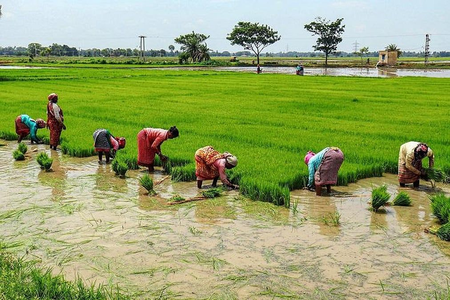
With the scorching summer heat affecting Tiruchy, Tamil Nadu, and the drying up of irrigation canals, farmers in the region are urging authorities to release water into crucial channels. Around 15,000 acres of summer paddy fields have been cultivated, along with various cash crops like banana, sugarcane, pulses, and more in Tiruchy and Karur district. The lack of water flow in major canals has raised concerns among farmers who fear worsening conditions without immediate action.
Farmers are currently relying on borewell irrigation due to declining groundwater levels, posing a significant challenge. They emphasize that even a small release of water into the Cauvery and its 17 irrigation canals, supplied by the Mayanur and Mukkombu barrages, could help recharge groundwater and offer temporary relief. In many villages, extensive flower cultivation depends entirely on borewells, with water levels decreasing sharply during the prolonged dry period.
The absence of water in channels like the Mettu Vaikkal is stressing banana growers, highlighting the necessity of consistent irrigation for their crops. The soaring temperatures have not only impacted agricultural activities but also daily life, emphasizing the urgent need for water release. Since late January, water has not been provided to irrigation canals following the closure of the Mettur Dam for delta irrigation, leading to a gradual depletion of groundwater reserves and causing water shortages for farmers and livestock.
Farmers traditionally expect a regulated water flow into the Cauvery during summer to support irrigation canals continuously or on a rotational basis. However, they claim that this practice has not been adhered to in recent years, with water being diverted for drinking water schemes and lift irrigation projects elsewhere. Despite sufficient storage levels in the Mettur reservoir, farmers are urging the state government to prioritize water release into the Cauvery system until the end of May. They are also calling on district authorities to address the issue promptly, stressing the critical need for intervention to sustain agriculture and stabilize groundwater.
