


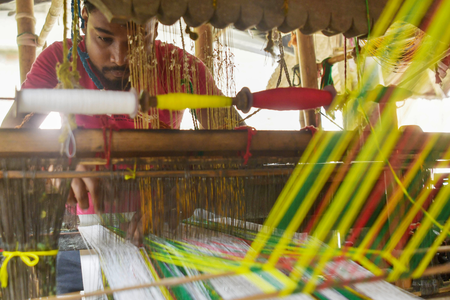
In the Budget 2026-27, Finance Minister Nirmala Sitharaman revealed plans to provide capital support for machinery, technology upgrades, and the establishment of common testing and certification centers to revamp traditional textile clusters. The government will introduce “Mega Textile Parks in challenge mode” to enhance infrastructure, efficiency, and value addition, as stated in an official release. These parks will facilitate advancements in technical textiles, crucial for industrial, medical, defense, and infrastructure sectors.
An integrated Programme for the Textile Sector with five sub-components, including a National Fiber Scheme, Textile Expansion and Employment Scheme, National Handloom and Handicraft Program, Tex-Eco Initiative, and Samarth 2.0 for skilling, was also announced. Samarth 2.0 aims to upgrade the textile skill ecosystem by fostering deeper collaboration with industry and academic institutions to ensure a skilled workforce across the value chain. Additionally, the Ministry of Textiles outlined initiatives to bolster khadi, handloom, and handicrafts through the Mahatma Gandhi Gram Swaraj Initiative, focusing on global market linkage, branding, training, and modernization processes.
The government extended the export obligation period from six to 12 months for exporters utilizing duty-free imported inputs in textile garments, leather garments, and synthetic footwear. This extension aims to enhance operational flexibility, compliance ease, and working capital management for exporters. Textile MSMEs are set to benefit from reforms in the Trade Receivables Discounting System (TReDS), including mandatory use by CPSEs, credit guarantee support, linking GeM with TReDS, and introducing TReDS receivables as asset-backed securities. Moreover, a dedicated Rs 10,000 crore SME Growth Fund has been introduced to nurture future champions based on specific criteria.
