


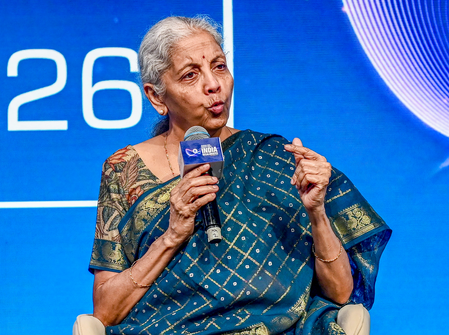
Finance Minister Nirmala Sitharaman stated that the ongoing Middle East conflict has caused a surge in India’s petroleum and fertiliser subsidy expenses due to global price hikes. Despite this, she assured that the government has sufficient reserves to handle the situation without altering the Budget estimates for 2026-27.
During the NDTV Profit Business Leadership Awards event, Sitharaman mentioned that she has set aside buffers to address the increased costs, particularly for oil and fertiliser imports at elevated prices. She also noted that provisions have been made to tackle challenges related to higher risk insurance premiums for ships passing through conflict zones.
Additionally, the Finance Minister highlighted concerns about deficient monsoon rains attributed to the El Nino effect, which are exacerbating existing inflation risks. She emphasized that inflation is not solely due to imports but is also influenced by domestic factors like inadequate rainfall, which can contribute to price pressures.
Sitharaman pointed out positive economic indicators such as robust goods and services tax collections, indicating resilient economic growth in India. Despite disruptions in the supply chain due to geopolitical tensions and the impact of a weak monsoon on agriculture, the Reserve Bank of India has forecasted a strong 6.6% growth rate for the economy in 2026-27.
The fiscal burden on India is increasing as the fertiliser subsidy bill experiences a significant surge alongside substantial financial aid provided to petroleum and fuel retailers in response to geopolitical uncertainties in West Asia. The original budget allocation for fertiliser subsidies in FY27 was around Rs 1.71 lakh crore, but escalating global prices for essential raw materials have raised the projected requirements considerably.
State-owned oil marketing companies like Indian Oil, BPCL, and HPCL have received substantial financial support, amounting to nearly Rs 1.23 lakh crore, to absorb shocks and stabilize retail fuel prices amid volatile global energy markets. The LPG subsidy component alone is expected to exceed Rs 1 lakh crore, surpassing initial budget expectations.
